Imagine that you have a beautiful physical store. You spend a fortune on mailboxing, radio ads and putting up an incredible showcase. You get 1,000 people a day to enter your store. But, for some reason, the cash register is at the back of a dark hallway, the prices are not clear, and the exit door is more visible than the products themselves.
What will happen? That those 1,000 people will look a little, get frustrated and leave without buying anything. In the digital world, this happens every day. And this is exactly where the C.R.O..
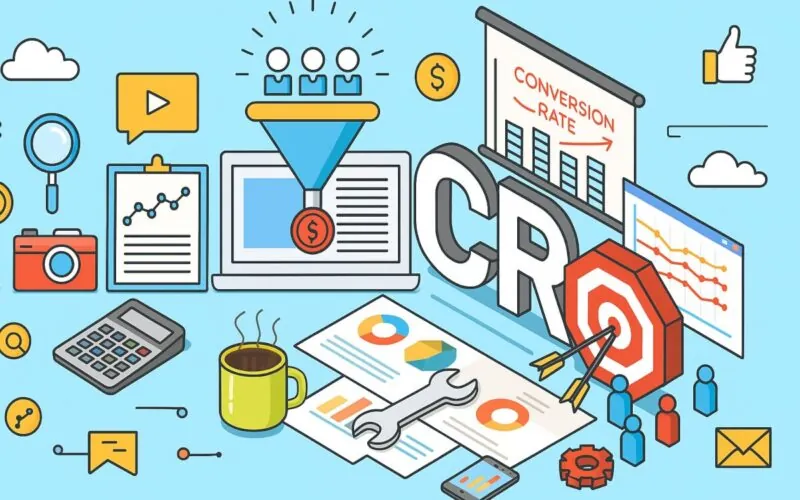
What exactly is CRO?
CRO is the acronym for Conversion Rate Optimization (Optimización de la Tasa de Conversión). En palabras más sencillas: es el arte y la ciencia de conseguir que un mayor porcentaje de los usuarios que ya visitan tu web hagan lo que tú quieres que hagan. Ya sea comprar un producto, rellenar un formulario, descargar un PDF o suscribirse a una newsletter.
Many businesses make the mistake of thinking that if they want double the sales, they need to buy double the traffic (spending twice as much on Google Ads or Meta Ads). The CRO offers you a much smarter path: Instead of paying to bring more people, let's convince those who are already here.
Why does your business need CRO?
Leaving CRO aside is literally leaving money on the table. When you start measuring and optimizing user experience, you realize several things:
- You take advantage of your investment in marketing: It's no use having the best advertising campaign if your landing page doesn't work well on mobile or the buy button fails.
- You make decisions based on data, not opinions: The CRO puts an end to discussions of "I think the button should be green" or "I like this text better." A/B tests are launched, which variant generates more sales is measured and the data decides for you.
- Improve user experience (UX): When trying to get people to buy more, you inevitably have to make their lives easier. You simplify menus, clarify texts and eliminate distractions.
How CRO works in real life
It's not about changing things at random to see what happens. Follow a scientific method:
- Analysis: We look at Google Analytics or use heat maps (like Hotjar) to see where users get stuck. Do they get to the cart but abandon it?
- Hypothesis: We believe that people abandon the cart because the shipping costs are not seen until the last step and they get scared.
- A/B Test: We created an alternative version of the website where shipping costs are visible from the beginning. Half of the traffic sees the original website and the other half sees the new one.
- Results: We analyze which one has sold the most and we definitively apply the winner.
Conclusion
Having a beautiful website is no longer enough. The digital market is too competitive to allow you the luxury of having "leaks" in your sales funnel. CRO is that invisible bridge between the marketing that attracts attention and the real sales that keep the business alive.
If your website has traffic but does not convert, before spending an extra euro on advertising, ask yourself: Am I making things easy for my clients?