All university students know the same scene: The moment to disconnect, you have exactly 30 minutes before returning to class, you arrive at the cafeteria and you find an endless queue. In the end, you spend the entire recess waiting for a snack or you decide not to buy anything to avoid wasting time.
The birth of Unibite
From this very everyday situation was born Unibite, a business idea that my classmates and I developed in the Business Creation subject. The concept was simple: create a platform where students could check the menu and prices and, most importantly, order their food in advance to pick it up without waiting in line.

Logo design for the Unibite project
Validation and the MVP
In order not to rely only on assumptions, we went out to validate the idea. We surveyed quite a few students and spoke to workers at several cafeterias. Indeed, we were facing a real problem: bottlenecks at rush hour generated frustration among students and caused local businesses to lose sales.
We decided to start as simple as possible. For the pilot test, we set up a very basic minimum viable product: a WhatsApp bot. The students wrote to him to consult the letter and make their request.
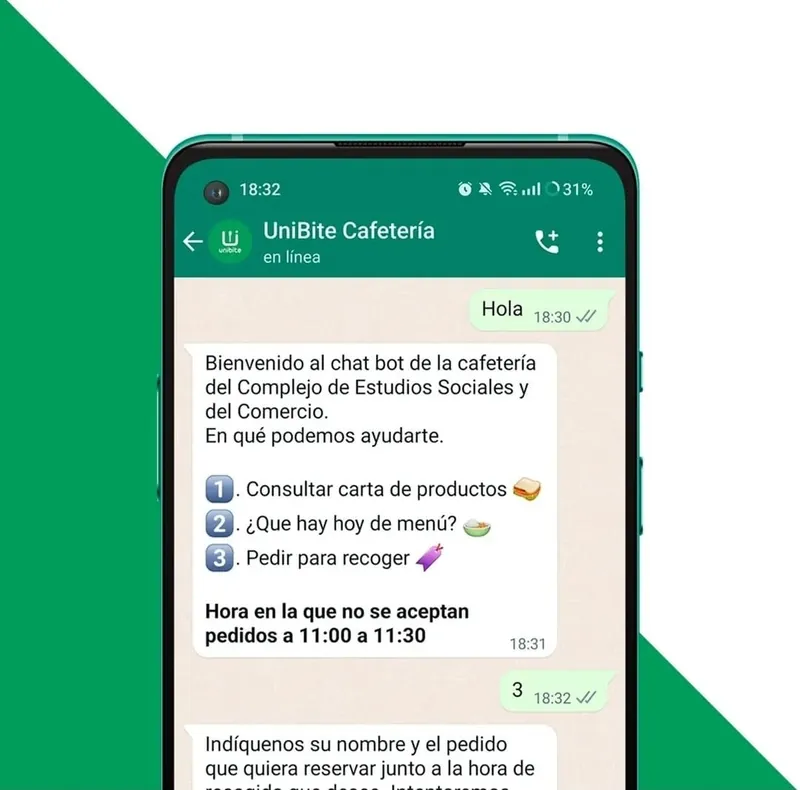
Automated interface through WhatsApp
In addition, to give it the appearance of a real business, we designed the visual identity and opened a profile on Google Business before testing it in the cafeteria of our own college.
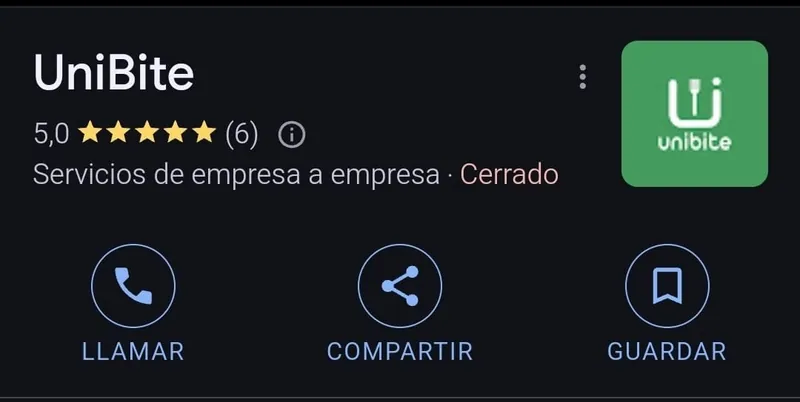
Google Business Profile
The shock of reality
And this was where we came face to face with reality. Developing the technology and setting up the bot had its difficulties, of course, but the real barrier was not there. The really complicated thing was changing the way the cafeteria worked.
Suddenly, the staff had to stop looking only at the bar to keep an eye on a cell phone in case digital orders arrived. We realized that the platform is a critical point, yes, but understanding how it integrates into the daily routine of a worker in a hurry is what makes the difference between success and failure.
The big lesson: Convincing traditional business owners to change their dynamics and buy a service they have never used is a challenge. Technology is only part of the equation. Marketing the service, overcoming internal resistance and gaining the trust of the B2B customer is the real challenge of any business idea.
Who knows, maybe in the future my colleagues and I will take Unibite back to make it a reality. We now know that, in addition to polishing the technology, we will need a much finer strategy to successfully implement it and reach the end customer.